Let's
be brutally honest — most people who want to start freelancing in 2026 are
stuck in the same trap. They spend weeks reading articles, watching YouTube
tutorials, and creating profiles on every platform they find… but they never
land a single client. Sound familiar? You're not alone. The problem isn't lack
of talent or effort. The real problem is not knowing the right starting point.
Freelancing has
exploded into a multi-billion dollar industry, and in 2026, the barriers to
entry are lower than ever. With AI tools, remote work culture, and a global
client base at your fingertips, there has never been a better time to build a
freelance career — even if you're starting from absolute scratch.
This guide will
walk you through a practical, no-fluff roadmap to start freelancing in 2026,
land your first paying client, and build momentum toward a sustainable income.
Why Freelancing in 2026 Is a Smart Move
The traditional
9-to-5 model is slowly losing its grip on the workforce. According to multiple
industry reports, over 50% of the global workforce will have some form of
freelance income by the end of this decade. Businesses — from small startups to
Fortune 500 companies — are increasingly outsourcing tasks to save costs and
access specialized talent.
What does that mean
for you? Opportunity. Massive, ongoing, scalable opportunity.
Top Reasons to Freelance Right Now
•
Work from anywhere in the
world with just a laptop and internet
•
Set your own hours and be
your own boss
•
Scale your income based on
your output, not seniority
•
Build a portfolio that
opens doors to higher-paying clients
•
Use AI tools to speed up
your workflow and charge premium rates
Step 1 — Choose Your Freelance Niche Wisely
This is where
most beginners go wrong. They try to offer everything to everyone, and end up
attracting no one. Your niche is the intersection of three things: what you're
good at, what people are willing to pay for, and what you genuinely enjoy
doing.
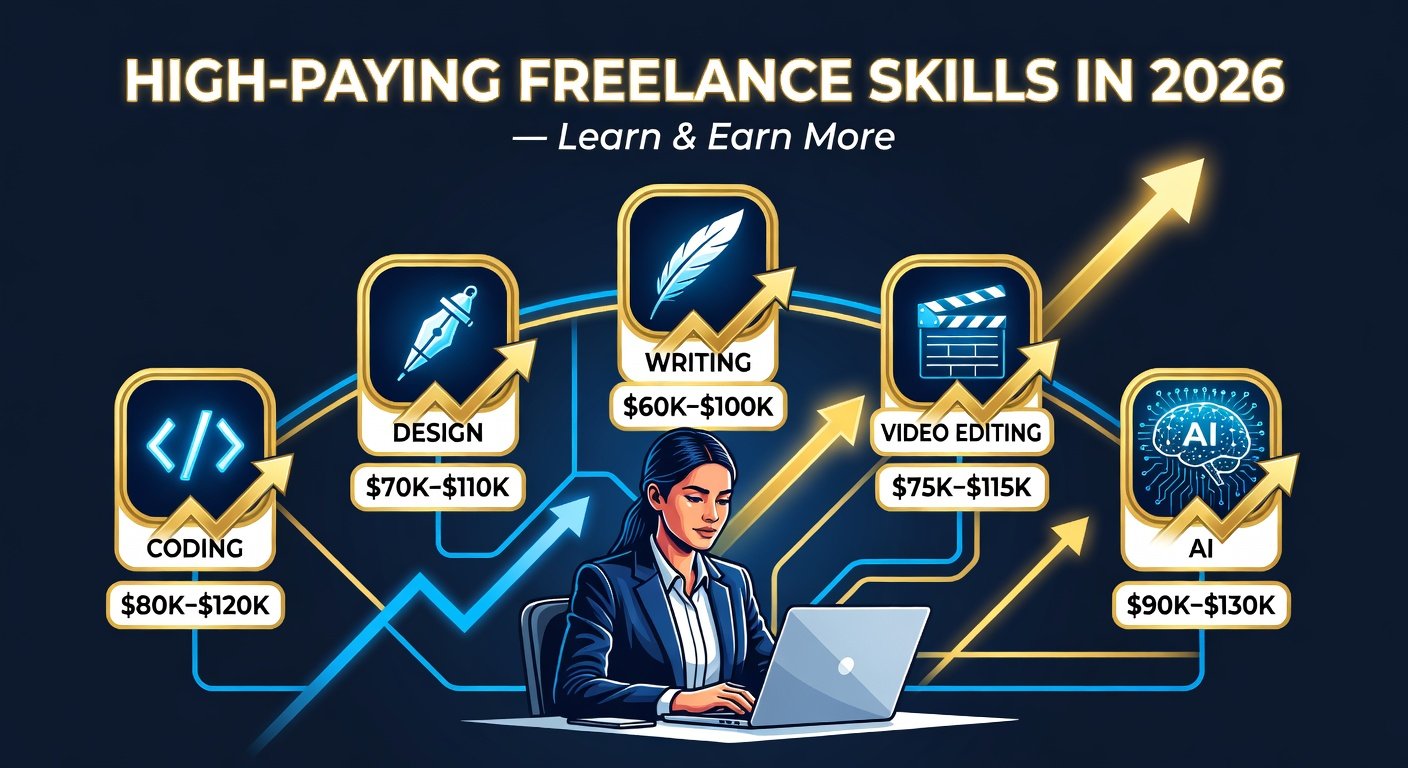
In 2026, the
most profitable freelance niches include:
1.
AI Prompt Engineering and
Automation
2.
Content Writing and SEO
Blogging
3.
Video Editing and
Short-Form Content (Reels, TikTok)
4.
Web Development (especially
WordPress and Shopify)
5.
Graphic Design (logos,
branding, social media kits)
6.
Virtual Assistance and
Project Management
7.
Email Marketing and Sales
Funnels
8.
Data Entry and Research
You don't need
to be the world's best at any of these. You just need to be better than the
average person your target client could hire on their own.
How to Identify Your Skill Set
Ask yourself:
What tasks have people asked me to help with before? What do I do that others
find complicated? What did you learn in school, previous jobs, or self-study
that has a market value?
If you
genuinely have zero skills right now, don't worry. You can learn a marketable
freelance skill in as little as 30 days using free resources on YouTube,
Coursera, or HubSpot Academy.
Step 2 — Set Up Your Freelance Profile the Right Way
Your freelance
profile is your storefront. It's the first impression a client gets of you, and
it either builds trust or destroys it.
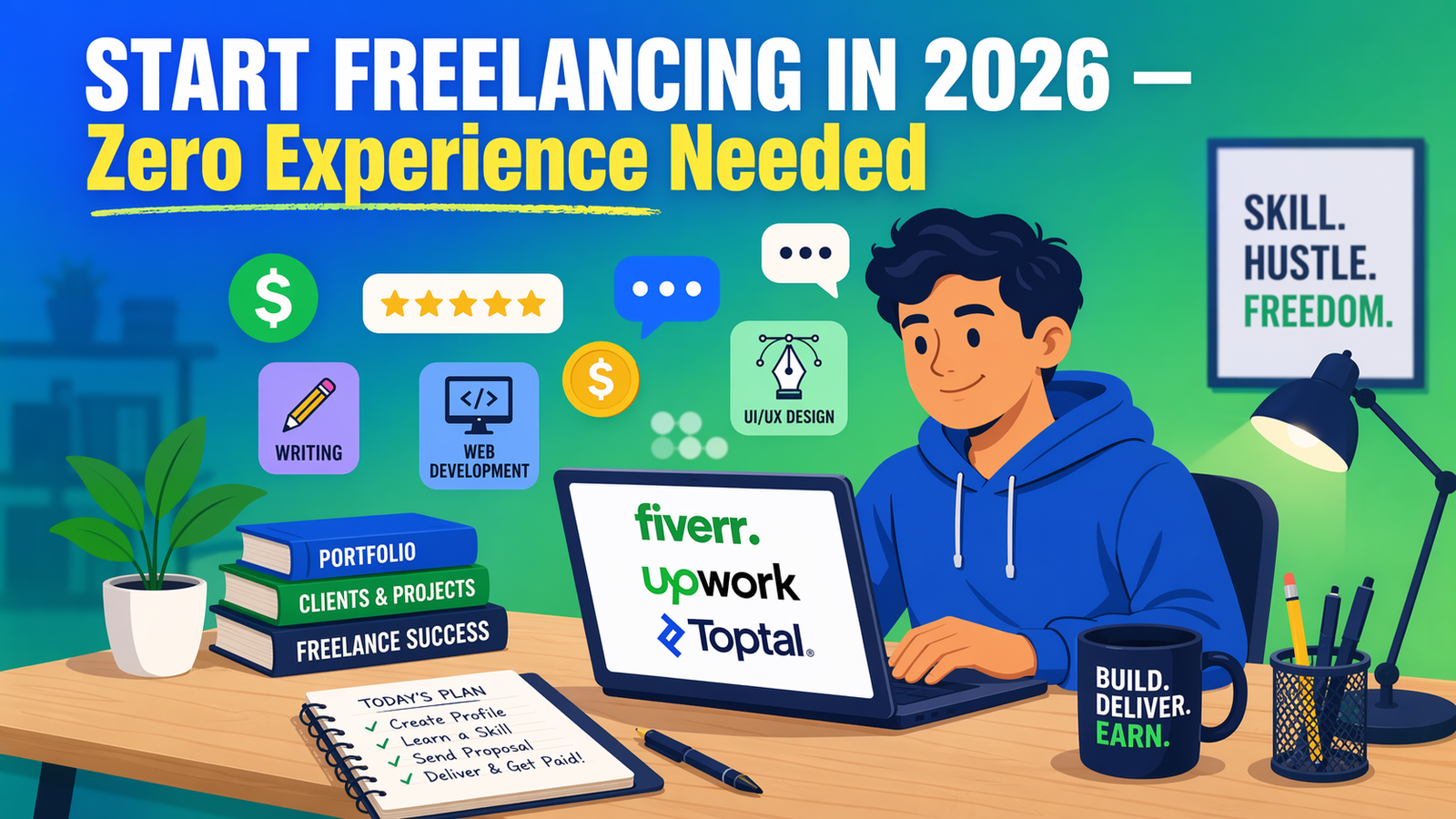
Whether you're
on Fiverr, Upwork, Freelancer.com, or Toptal, here's what your profile must
include:
•
A professional headshot
(not a selfie — use a clean background)
•
A clear, benefit-driven
headline (e.g., "I help SaaS companies grow organic traffic through SEO
content")
•
A detailed bio that focuses
on solving client problems, not listing your hobbies
•
Sample work (even if it's
work you created for yourself or practice projects)
•
At least 3 service packages
clearly priced
•
Client-focused language —
always say "you/your" more than "I/my"
Creating Samples When You Have No Portfolio
You don't need
paid clients to build a portfolio. Create 3–5 sample pieces for imaginary or
real companies. Design a logo for a local restaurant. Write a sample blog post.
Build a one-page website for a fictional brand. These samples demonstrate
ability, and ability is what clients are paying for.
Step 3 — Find Your First Freelance Client
This is the
moment most beginners freeze. But finding your first client is simpler than you
think — if you use the right strategies.
Strategy 1 — Start in Your Warm Network
Tell everyone
you know that you're offering a service. Post on your personal Facebook,
WhatsApp, or LinkedIn. Offer a discounted rate for your first 3 clients in
exchange for an honest review. This single strategy has helped thousands of
beginners get their first paid job within days.
Strategy 2 — Cold Outreach Done Right
Go to
Instagram, LinkedIn, or Google and find small business owners in your niche who
don't have a strong online presence. Send them a personalized message — not a
copy-paste pitch — explaining exactly how you can help them, what result they
can expect, and what it will cost. Keep it short, specific, and genuine.
Strategy 3 — Leverage Facebook and LinkedIn Groups
Join groups
where your target clients hang out. Answer questions, provide value, and build
trust. When someone posts looking for the service you offer, respond quickly
and professionally.
Step 4 — Price Your Services to Grow
One of the
biggest mistakes beginners make is pricing too low, thinking it will attract
clients. In reality, extremely low pricing signals poor quality. Start with
fair market rates, deliver excellent work, collect reviews, and raise your
rates every 3–6 months.
A beginner
content writer can reasonably charge $15–$25 per article. A beginner graphic
designer can charge $50–$150 per logo. A beginner web developer can charge
$200–$500 for a basic website. These are conservative starting points — they
will grow as your reputation does.
Step 5 — Use AI Tools to Compete Like a Pro
In 2026, the
smartest freelancers aren't working harder — they're working smarter. AI tools
like ChatGPT, Jasper, Canva AI, and Adobe Firefly allow you to produce
professional-quality work in a fraction of the time.
•
Use ChatGPT or Claude for
drafting, brainstorming, and editing
•
Use Canva for fast,
beautiful graphic design work
•
Use Descript or CapCut for
video editing
•
Use Grammarly for polishing
your written work
•
Use Notion AI to manage
projects and client communication
Being an
AI-assisted freelancer isn't cheating — it's an edge. Clients care about
results, and if you can deliver faster and better, they'll pay more and refer
you to others.
Step 6 — Deliver, Retain, and Scale
Getting your
first client is just the beginning. The real money in freelancing comes from
repeat clients and referrals. Over-communicate, deliver before deadlines, and
always follow up after project completion.
Once you have 5
positive reviews, you'll notice clients start coming to you. At that point, you
can start raising your rates, specializing further, or even hiring a small team
and transitioning into a freelance agency.
Common Mistakes to Avoid as a Beginner
•
Don't take on every project
— it leads to burnout and poor quality
•
Don't skip contracts —
always have written agreements, even simple ones
•
Don't underestimate
deadlines — missed deadlines destroy your reputation
•
Don't neglect marketing
yourself even when you're busy — the pipeline should always be full
•
Don't rely on one platform
— diversify your client sources
Final Thoughts
Starting
freelancing in 2026 is genuinely one of the most accessible ways to create a
new income stream, whether you want a side hustle or a full-time career. The
tools are available, the clients are waiting, and the market is growing. What
you need is a clear plan and the courage to start.
Pick one skill.
Build a basic profile. Reach out to three potential clients this week. That's
it. Everything else will follow.