That's where
you come in.
As a virtual
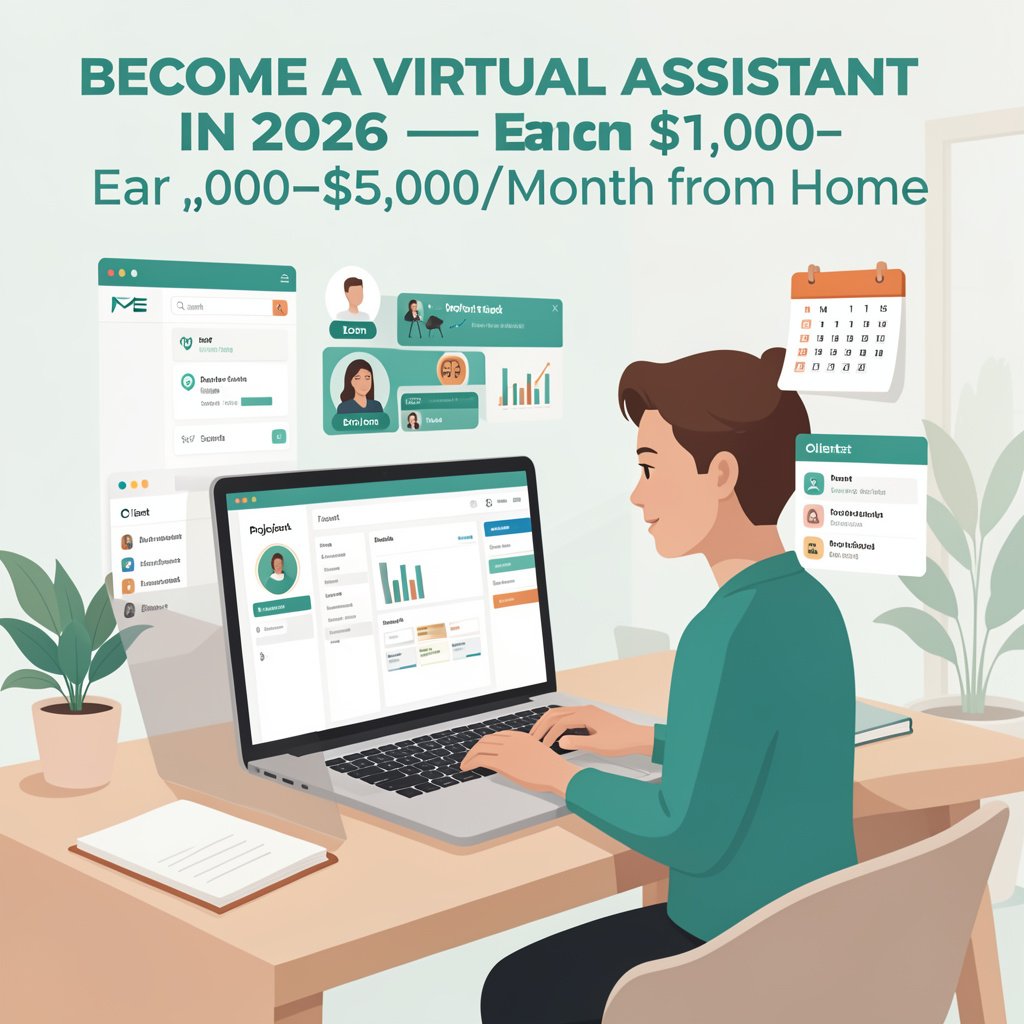
assistant in 2026, you can earn $15–$75+ per hour, work entirely from home,
choose your clients, and set your own schedule. This guide breaks down exactly
what you need to get started, what to offer, how to find clients, and how to
grow your VA business into a reliable full-time income.
What Does a Virtual Assistant Actually Do?
A virtual
assistant provides remote support services to businesses or entrepreneurs.
Tasks vary widely based on your skills and your client's needs.
Common Virtual Assistant Tasks
•
Email management and inbox
organization
•
Social media scheduling and
management
•
Calendar management and
appointment setting
•
Customer service and live
chat support
•
Data entry and database
management
•
Research (competitor
analysis, lead research, content research)
•
Blog post formatting and
publishing
•
Bookkeeping and invoice
management
•
Online shopping and travel
booking
•
Project management (coordinating
teams and deadlines)
Specialized High-Paying VA Services
•
Podcast management
(editing, show notes, promotion)
•
Launch coordination for
online courses and products
•
Pinterest VA (creating and
scheduling pins for traffic growth)
•
Facebook Ads management assistance
•
Funnel building assistance
(ClickFunnels, Kajabi)
•
YouTube management
(thumbnail creation, descriptions, uploading)
•
Executive virtual assistant
to high-level CEOs and founders
Specialized VAs
often earn 2–3x more than general VAs because they have niche expertise that's
harder to replace.
Step 1 — Identify Your VA Skills and Services
You don't need
to offer everything. In fact, specializing in 2–4 services makes you easier to
market and allows you to charge more.
Questions to Identify Your Best VA Services
1.
What tasks have you done in
previous jobs that you're genuinely good at?
2.
Are you organized? Great at
email? Comfortable with technology?
3.
Do you have experience with
specific tools (Asana, Notion, HubSpot, Canva)?
4.
Do you have any
industry-specific knowledge (real estate, health coaching, e-commerce)?
Even if you
have no professional experience, you likely have transferable skills.
Scheduling, writing, research, basic design, and social media are skills most
people already have at some level.
Step 2 — Learn the Tools of the Trade
Clients expect
VAs to be proficient with the tools they use. In 2026, the most commonly
requested platforms include:
•
Project management: Asana,
Trello, Monday.com, Notion
•
Communication: Slack, Zoom,
Microsoft Teams
•
Email: Gmail, Outlook, with
tools like Boomerang or SaneBox
•
Social media scheduling:
Buffer, Hootsuite, Later
•
Design: Canva (essential
for modern VAs)
•
Docs and spreadsheets:
Google Workspace (Docs, Sheets, Drive)
•
Customer relationship
management: HubSpot, Dubsado, 17hats
•
Bookkeeping: QuickBooks,
FreshBooks, Wave
Most of these
tools have free versions with comprehensive tutorial libraries. Invest a few
hours learning the ones most relevant to your target clients.
Step 3 — Set Your Rates
Many new VAs
undercharge because they lack confidence. Here's a reality check: even an
inexperienced VA doing general administrative tasks is worth at least $15–$20
per hour. Specialized VAs can charge $40–$75+ per hour.
Pricing Structures
•
Hourly rate: Best for
flexible, varied tasks (charge $15–$60/hour)
•
Monthly retainer: Fixed
hours per month at an agreed rate (more stable income)
•
Package pricing: Bundle
specific services (e.g., "Social Media Management Package: 20 posts/month
+ scheduling = $350/month")
Start with
hourly or package pricing and transition to retainers as you build trust with
long-term clients.
Step 4 — Find Your First VA Clients
Finding clients
is often the biggest hurdle for new VAs. Here are the most effective
strategies:
Free Methods to Find VA Clients
1.
Facebook groups: Join
groups like "Virtual Assistant Savvies," "Online Business
Owners," and niche-specific entrepreneur groups. Post value, engage, and
announce your availability
2.
LinkedIn: Optimize your
profile with "Virtual Assistant | [Your Specialty]" in the headline.
Connect with entrepreneurs, coaches, and small business owners
3.
Upwork and Fiverr: Create
profiles highlighting your specific services with clear packages
4.
Warm outreach: Message 10
small business owners per day explaining how you can help them specifically
5.
Instagram: Follow and
engage with entrepreneurs in your target niche — many post when they need help
Paid Methods to Find Clients Faster
•
VA marketplaces: Zirtual,
Fancy Hands, Time Etc., BELAY (apply and get matched with clients)
•
Freelance platforms:
Toptal, PeoplePerHour
•
Social media ads: Target
small business owners in your niche with a clear service offer
Step 5 — Onboard and Retain Your Clients
Getting a
client is exciting. Keeping them for 6–12+ months is where the real income
lies. Create a simple onboarding process that impresses clients from day one.
VA Client Onboarding Checklist
•
Send a welcome packet
explaining your process, availability, and communication style
•
Sign a contract (even a
simple one) covering scope, rates, and termination notice
•
Conduct an onboarding call
to understand their business, tools, and priorities
•
Set up shared workspaces
(Google Drive folder, Notion page, Slack channel)
•
Establish regular check-ins
(weekly Loom video or email summary of work done)
Over-communication
and reliability will turn your first 3-month client into a year-long
relationship.
How Much Can a VA Earn in 2026?
•
Part-time (10 hours/week):
$600–$2,400/month
•
Full-time (30 hours/week):
$1,800–$7,200/month
•
Specialized VA (20
hours/week at premium rates): $3,000–$8,000+/month
Many
experienced VAs eventually transition into VA agency owners, managing teams of
subcontractors and earning even more.
Final Thoughts
Being a virtual
assistant in 2026 is a legitimate, in-demand career path that you can start
quickly and grow consistently. It doesn't require a formal degree, startup
capital, or years of experience. What it requires is reliability, good
communication, and genuine desire to help clients succeed.