In 2020, researchers at Google
DeepMind published a study showing their AI system AlphaFold had solved the
protein folding problem — a challenge that had stumped structural biologists
for 50 years. In radiology, AI systems are detecting cancers in mammograms and
CT scans with accuracy that matches or exceeds radiologists. In drug discovery,
AI is reducing the time from molecule identification to clinical trial from 12
years to under 4 years.
The impact of AI on healthcare
is not hypothetical or distant. It's happening now, across disciplines, with
increasingly documented patient outcomes. But alongside these genuine
breakthroughs, AI in healthcare carries risks, limitations, and ethical
challenges that deserve equal attention. This guide covers both.
Medical Imaging and Diagnosis: Where AI Is Proving Its Value
Radiology and Pathology
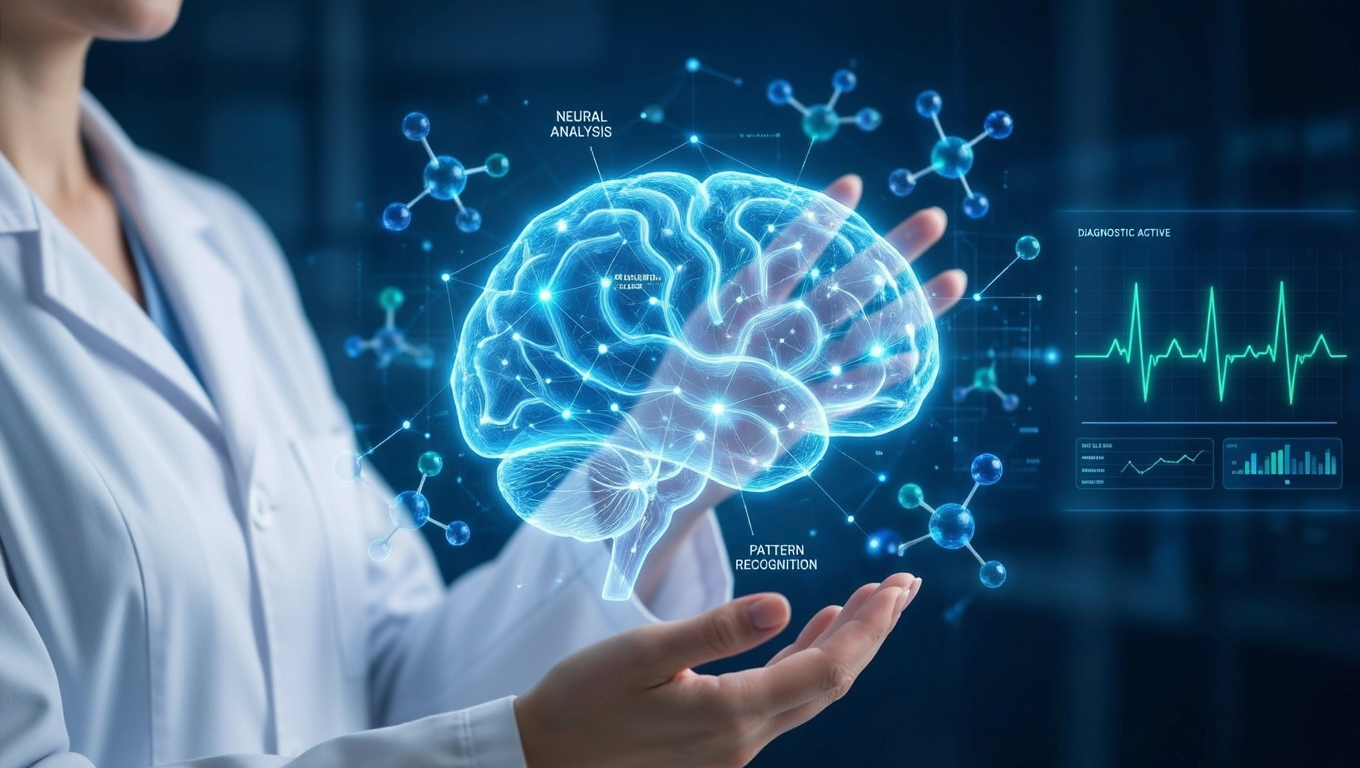
AI analysis of medical images is
the most mature and well-evidenced area of healthcare AI. Multiple
peer-reviewed studies show AI systems achieving diagnostic accuracy in chest
X-ray interpretation, mammography screening, diabetic retinopathy detection,
and skin cancer classification that is comparable to or better than specialist
physicians. Google's DeepMind AI for eye disease detects over 50 eye conditions
from OCT scans with accuracy matching retinal specialists.
The practical implication is not
replacement but augmentation: AI serves as a second reader that catches what
human readers miss, particularly in high-volume screening environments. Studies
in NHS screening programs found that AI as a second reader caught 11.9% more
cancers in mammography screening while reducing false positive rates.
Sepsis and Early Warning Systems
Sepsis kills approximately
270,000 Americans annually, primarily because it progresses rapidly and is
often identified too late. AI systems analyzing electronic health records —
vital signs, lab values, medication administration — can identify sepsis risk
hours before conventional clinical criteria trigger an alert. Epic's sepsis
prediction algorithm, deployed across thousands of hospitals, has been
associated with measurable reductions in sepsis mortality where it's been
properly implemented.
Drug Discovery: AI Compressing the Timeline
Traditional drug discovery takes
12-15 years and costs over $2.5 billion to bring a drug to market. AI is
disrupting this timeline at multiple stages. In target identification, AI
analyzes genomic and proteomic data to identify disease mechanisms that would
take human researchers years to uncover. In molecule design, generative AI
creates novel molecular structures with specific binding properties. In
clinical trial design, AI analyzes patient data to identify optimal trial
populations, reducing trial failure rates due to patient selection. Insilico
Medicine used AI to identify a novel drug target and design a candidate
molecule for idiopathic pulmonary fibrosis in 18 months — a process that
conventionally takes 4-5 years.
AI Mental Health Tools: Promise and Caution
AI mental health apps like
Woebot, Wysa, and Replika are used by millions, and preliminary research shows
benefits for mild to moderate anxiety and depression symptoms. These tools can
provide continuous support between therapy sessions and reach populations with
limited access to mental health professionals.
However, clinical psychologists
emphasize important limitations. These tools are not replacements for
professional care for moderate to severe conditions. The therapeutic
relationship — a core element of effective therapy — cannot be replicated by
AI. And AI mental health tools face serious unanswered questions about
long-term effects and appropriate use boundaries. For crisis situations, human
professional support is irreplaceable.
The Limitations and Risks of Healthcare AI
Bias and Equity Concerns
AI diagnostic systems trained
predominantly on data from specific demographic groups perform less accurately
for underrepresented groups. A widely cited study in The Lancet found that
pulse oximeters, enhanced with AI in some implementations, were more likely to
miss low oxygen levels in Black patients due to training data that
underrepresented this population. Healthcare AI risks compounding existing
health disparities if diverse and representative training data is not
prioritized.
Regulatory and Liability Framework
The regulatory environment for
healthcare AI is still evolving. The FDA has cleared hundreds of AI-based
medical devices, primarily in imaging applications, but the framework for
ongoing monitoring, retraining, and accountability when AI systems make errors
remains underdeveloped. Who is responsible when an AI diagnostic system misses
a cancer — the hospital, the AI vendor, or the physician who relied on it?
These questions are actively being litigated.
The Black Box Problem in Clinical Settings
Many high-performing AI systems
are black boxes — they produce outputs without interpretable reasoning. In
clinical settings, physicians need to understand why a diagnostic AI flagged a
concerning finding in order to weigh it appropriately and explain it to
patients. Explainable AI (XAI) in healthcare is an active research area
precisely because black box outputs undermine clinical trust and appropriate
use.
Conclusion
AI in healthcare represents one
of the most consequential applications of artificial intelligence, with
documented impact on diagnostic accuracy, drug discovery timelines, and care
delivery efficiency. But healthcare AI is not a solved problem — it carries
meaningful risks around bias, accountability, explainability, and appropriate
application boundaries. The most responsible path forward involves rigorous
validation, diverse training data, transparent explainability, clear liability
frameworks, and sustained investment in the human clinical expertise that AI
augments rather than replaces.