When someone near your business
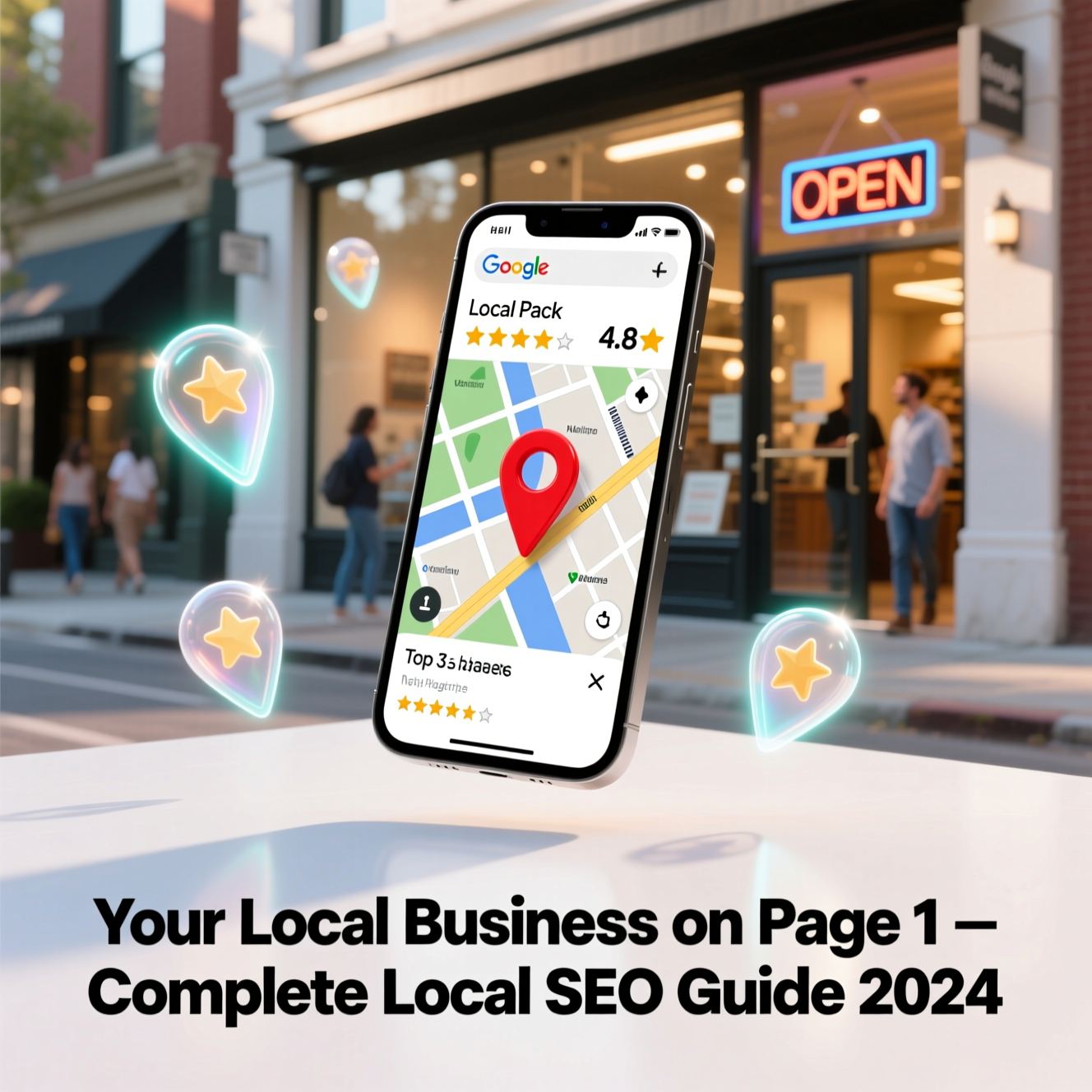
searches 'coffee shop near me,' 'plumber in [city],' or 'best dentist
downtown,' Google shows a Local Pack — a map with three business listings
appearing before any regular search results. These three positions receive 44%
of all clicks for local searches. Ranking in the Local Pack is one of the
highest-value marketing outcomes for any local or service business.
Local SEO is different from
regular SEO. While standard SEO focuses on domain authority and content, local
SEO adds a proximity and prominence layer that can be optimized specifically.
Here is how.
How Google Ranks Local Businesses: Three Core Factors
• Relevance:
how closely does your business match what the searcher is looking for?
• Distance:
how physically close is your business to the searcher?
• Prominence:
how well-known and trusted is your business online (reviews, links, mentions)?
You cannot control distance, but
you can dramatically influence relevance and prominence.
Step 1: Google Business Profile — The Foundation
Your Google Business Profile
(GBP, formerly Google My Business) is the single most important local SEO
asset. It controls what appears in Google Maps and the Local Pack.
Claiming and Verifying Your Profile
1. Go
to business.google.com and search for your business
2. Claim
the listing (or create a new one if it does not exist)
3. Verify
your business by postcard, phone, or video — this is mandatory
4. Once
verified, begin full profile optimization
Complete Profile Optimization
• Business
name: exactly as it appears in the real world. Do NOT add keywords to your
business name — this violates Google's guidelines and can result in suspension.
• Category:
choose the most specific primary category available. You can add up to 10
secondary categories. Categories directly affect which searches trigger your
listing.
• Description:
750-character business description. Include your main services, locations
served, and differentiators naturally. Include relevant keywords without
stuffing.
• Hours:
keep accurate and up-to-date. Set special hours for holidays. Incorrect hours
damage trust.
• Phone
number and website: consistent with your website and other online listings.
• Photos:
upload minimum 10-15 high-quality photos. Cover: exterior, interior, team,
products/services, signage. Businesses with photos receive 35% more clicks.
Update photos regularly.
• Services/Products:
add every service you offer with detailed descriptions and pricing where
appropriate.
Step 2: Review Strategy — The Most Powerful Local SEO Signal
Reviews are the most visible
trust signal in local search and one of Google's strongest ranking factors for
local results. The quantity, quality, and recency of reviews all matter.
Getting More Reviews
Most happy customers do not
leave reviews unless asked — and most businesses never ask. Fix this with a
systematic approach:
5. Create
a direct Google review link: go to your GBP, click 'Get more reviews,' and copy
the direct review link
6. Send
the link to satisfied customers via email or text within 48 hours of a positive
interaction
7. Add
a 'Leave us a review' request at the bottom of invoices, receipts, and email
signatures
8. Train
customer-facing staff to mention reviews after positive interactions ('If you
are happy with the service, a Google review really helps us')
Responding to Reviews
Respond to every review —
positive and negative. Google weights review responses as engagement signals.
For negative reviews: respond professionally, acknowledge the concern, offer a
resolution path. Never argue publicly. A well-handled negative review often
impresses potential customers more than a dozen positive ones.
Step 3: NAP Consistency — Name, Address, Phone Number
Your business's Name, Address,
and Phone Number (NAP) must be absolutely consistent across every online
platform: your website, Google Business Profile, Yelp, Facebook, industry
directories, and chamber of commerce listings. Inconsistencies confuse Google
about which listing is authoritative.
Common inconsistencies to fix:
'Street' vs 'St.' vs 'St', suite numbers written differently, phone number
format (spaces vs dashes vs parentheses), business name variations (Company
Name LLC vs. Company Name).
Tool: use Moz Local or
BrightLocal to audit your NAP consistency across hundreds of directories
simultaneously.
Step 4: Local Citations — Building Online Authority
A local citation is any online
mention of your business name, address, and phone number — even without a link.
Citations on authoritative directories signal to Google that your business is
legitimate and prominent.
Priority Citation Sources
• Google
Business Profile (most important)
• Bing
Places for Business
• Apple
Maps Connect
• Yelp
Business
• Facebook
Business Page
• Industry-specific
directories (Houzz for home services, Healthgrades for medical, Avvo for legal,
etc.)
• Local
chamber of commerce and business associations
• Yelp,
Foursquare, Citysearch
Step 5: Local-Focused Website Optimization
Your website needs to signal
local relevance to Google.
Key On-Page Elements for Local SEO
• Include
city/region in your page title: 'HVAC Services in Austin, TX | ABC Heating and
Cooling'
• NAP
information in footer on every page (consistent with GBP)
• Embed
a Google Map of your location on your contact page
• Create
individual location pages if you serve multiple areas — each page targeting
that specific location
• Add
LocalBusiness Schema markup to help Google identify your NAP data
Step 6: Local Backlinks
Local backlinks from other
businesses, organizations, and websites in your geographic area signal local
prominence to Google.
Local Link Building Strategies
• Sponsor
local events, charities, or youth sports teams — their websites typically link
to sponsors
• Join
your local chamber of commerce — they list and link members
• Partner
with complementary local businesses for mutual link exchanges
• Get
featured in local news articles or business profiles
• Offer
to write guest content for local business blogs or community websites
Google Posts: Underused Local SEO Tool
Google Posts appear within your
Business Profile in search results — a free advertising space most businesses
ignore. Post updates about:
• Current
promotions or limited-time offers
• New
services or products
• Events
at your location
• Important
news or updates
Posts expire after 7 days
(Events stay until the event date). Posting weekly keeps your profile active
and signals engagement to Google.
Measuring Local SEO Progress
• GBP
Insights: views, searches, direction requests, phone calls from your profile
• Local
Pack ranking for target keywords (use Local Falcon or BrightLocal)
• Organic
traffic from local searches in Google Search Console
• Review
count and average rating trends
Expect 2-4 months before
significant ranking improvements materialize. Local SEO compounds — consistent
effort over 6-12 months produces dramatic results.
Conclusion
Local SEO is the highest-ROI digital marketing investment for any business serving a specific geographic area. A fully optimized Google Business Profile, systematic review acquisition, NAP consistency, and local website optimization create a foundation that consistently attracts nearby customers. Start with your Google Business Profile today — complete every section thoroughly and begin your review acquisition system. The Local Pack is attainable for most local businesses within 3-6 months of consistent effort.