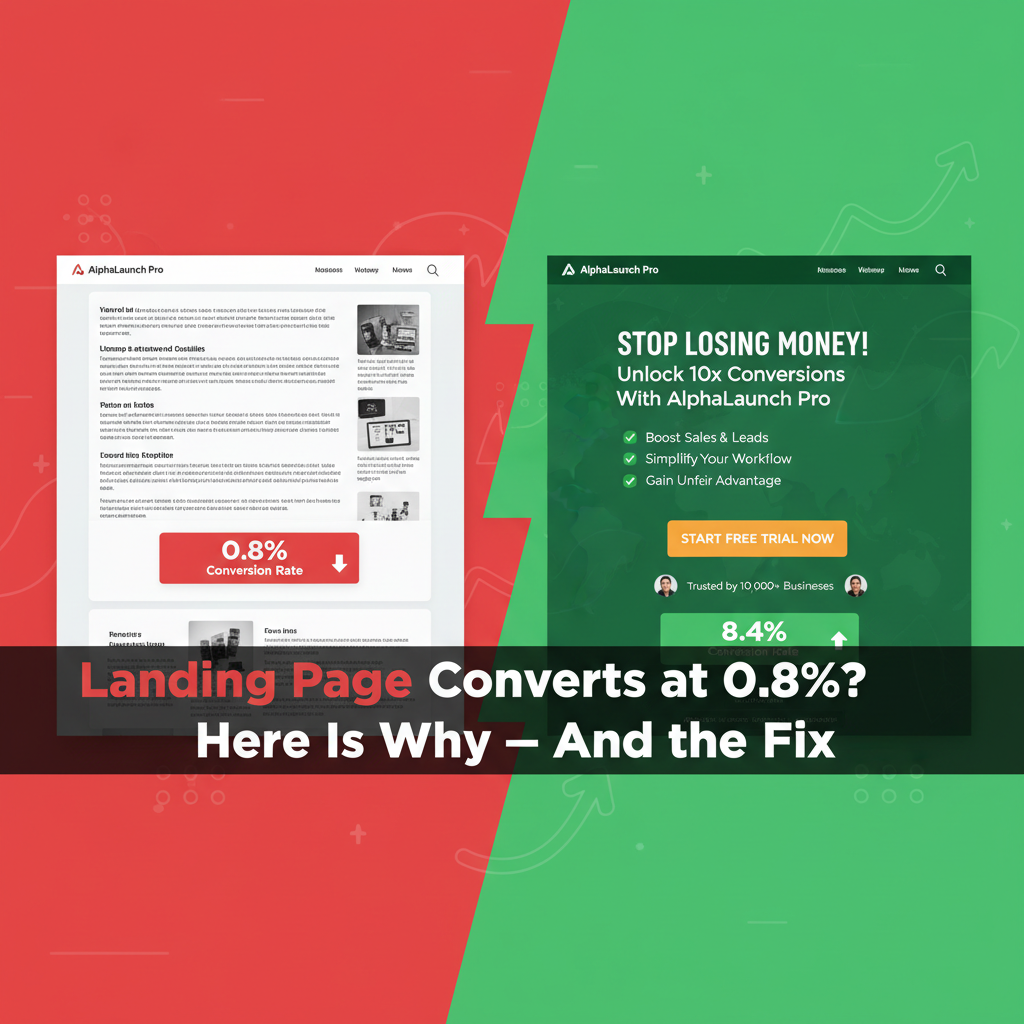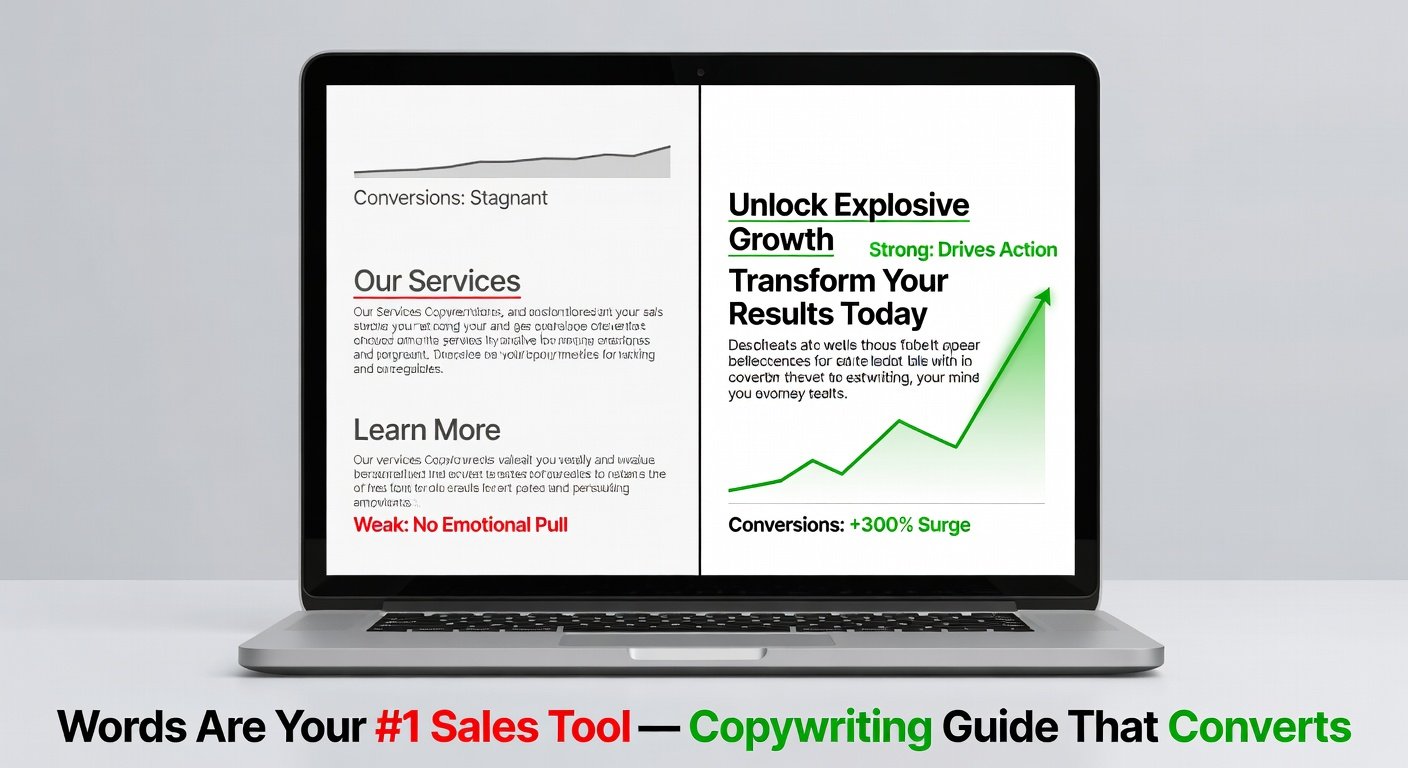
Your website has one job: to
make the visitor take the next desired action. Buy, subscribe, book, inquire.
Every other element — design, speed, SEO — serves that objective. Yet most
websites fail at this fundamental level, not because of poor design or slow
loading, but because the words on the page are vague, generic, and ultimately
unconvincing.
Conversion copywriting is the
specific discipline of writing words that move people from hesitation to
action. This guide covers the core principles and specific techniques that
transform mediocre website copy into a powerful sales tool.
The First Principle: Write About Them, Not About You
Read most business websites and
you find: 'We are a leading provider of...' 'Our team has 20 years of
experience...' 'We are committed to excellence...' This copy is entirely about
the business. The visitor does not care about any of this at first contact.
They care about one thing: whether you can solve their specific problem.
Transform your copy by replacing
'We' with 'You' wherever possible. Replace feature statements with benefit
statements. Compare:
•
'We use advanced project management software' → 'Your
projects are delivered on time, every time — because we use the same systems
NASA does'
•
'We offer 24/7 support' → 'Whenever something goes
wrong — midnight, weekends, holidays — someone is available to fix it
immediately'
Understanding What People Actually Buy
People do not buy products or
services. They buy better versions of their future self, or relief from a
current pain. Every purchase is ultimately driven by one of these motivators:
•
Financial gain or savings
•
Time savings or convenience
•
Physical or emotional comfort
•
Status or recognition
•
Belonging or connection
•
Fear elimination or risk reduction
Effective copy identifies which
primary motivator drives your buyer and speaks directly to it. A tax accountant
does not sell 'accounting services' — they sell 'never worry about taxes again'
(fear elimination) or 'maximize every dollar you keep' (financial gain).
Homepage Copy: The Most Important Real Estate
Your homepage has approximately
5-8 seconds to communicate what you do, who you do it for, and why visitors should
keep reading. Most homepages fail this test with vague hero headlines like
'Your Success is Our Mission' — meaningless without context.
The Crystal Clear Homepage Formula
The hero section of your
homepage should immediately answer: What do you do? For whom? What results do
they get?
•
Formula: 'I/We help [specific audience] achieve
[specific result] without [common pain or sacrifice]'
•
Example: 'We help SaaS founders generate 50 qualified
sales calls per month without cold outreach'
•
Example: 'We help first-time homebuyers navigate the
purchase process with complete confidence — and without overpaying by
thousands'
This specificity will seem like
it narrows your appeal. In reality, it dramatically increases conversion from
your actual ideal audience — the people who read it and immediately think 'that
is exactly me.'
The AIDA Framework: Structuring Your Copy
AIDA (Attention, Interest,
Desire, Action) is the most durable copywriting framework and works for any
page length:
•
Attention: the headline — stops the scroll, creates
instant relevance
•
Interest: the supporting copy — confirms you understand
their situation in detail
•
Desire: benefits, social proof, and proof of results —
makes them want what you offer
•
Action: the call to action — tells them exactly what to
do next
Every web page, email, and ad
should follow this structure — regardless of industry.
Headline Writing: The Most Leveraged Copywriting Skill
David Ogilvy wrote: 'On average,
five times as many people read the headline as read the body copy.' Your
headline determines whether anyone reads anything else.
Headline Formulas That Convert
•
The Specific Result: 'How We Helped a Bakery Triple
Revenue Without Any New Customers'
•
The Question: 'Are You Making These 7 Mistakes in Your
Email Campaigns?'
•
The How-To: 'How to Close More Sales in 30 Days —
Without Discounting'
•
The Warning: 'Why Most Freelancers Never Reach $10,000/Month
(And How to Be Different)'
•
The Direct Benefit: 'Clean, Healthy Indoor Air in 24
Hours — Guaranteed'
Test multiple headline versions.
In A/B tests, headline changes alone produce 10-200% conversion rate
differences.
Features vs. Benefits: The Critical Distinction
Features describe your product
or service. Benefits describe what those features do for the customer. Benefits
sell. Features justify.
The 'So What?' Exercise
Take every feature statement and
ask 'So what? What does this mean for the customer?' until you reach the
emotional core:
'Our software has 40 reporting
templates' → So what? → 'You get instant data without building reports' → So
what? → 'You spend your time making decisions, not compiling spreadsheets' —
NOW you have a benefit.
Social Proof: Borrowed Trust
Trust is the prerequisite for
conversion. Social proof is borrowed trust — you leverage others' credibility
to build yours with new visitors.
Social Proof Hierarchy
Most to least persuasive:
•
Case studies with specific, measurable results from
named clients
•
Video testimonials — authenticity and emotion are
conveyed that text cannot match
•
Text testimonials with full name, photo, company, and
specific result
•
Star ratings with review count from recognized
platforms (Google, Trustpilot, G2)
•
Client logo bars for B2B — 'trusted by' with
recognizable names
Placement: above the fold if
possible, certainly near every CTA, and on the specific claim you are making.
Handling Objections in Your Copy
Every visitor has objections —
reasons they are hesitating. The job of body copy is to surface and resolve
these objections before the visitor has to bring them up. Common objections:
•
'It is too expensive' → Focus on ROI, cost of not solving
the problem, or payment options
•
'I'm not sure it will work for me' → Industry-specific
case studies and testimonials
•
'What if I'm not satisfied?' → Guarantee, trial period,
free first session
•
'I've been burned before' → Unique differentiator, your
process, transparency about results
The most effective FAQ sections
address real objections, not easy questions.
The Call to Action: Direction, Not Just a Button
The CTA is not just a button —
it is the final instruction that tells visitors exactly what to do and what
happens next. Weak CTAs: 'Submit,' 'Learn More.' Strong CTAs: 'Get My Free
Strategy Session,' 'Start Your 14-Day Trial,' 'Reserve Your Spot Before They're
Gone.'
Add micro-copy below CTAs to
reduce perceived risk: 'No credit card required,' 'Takes 30 seconds,' 'Cancel
anytime,' '100% free forever.'
Editing for Conversions
After writing, edit ruthlessly:
•
Remove every sentence that does not move the reader
toward conversion
•
Replace jargon with plain language — 'utilize' becomes
'use,' 'leverage' becomes 'use'
•
Break up long paragraphs — maximum 3-4 sentences
•
Use 'you' more than any other word
•
Read aloud — if it sounds unnatural spoken, rewrite it
Conclusion
Website copy is your 24/7
salesperson. Unlike a human salesperson, it talks to thousands of potential
customers simultaneously, never has a bad day, and never forgets the key
selling points. Investing in strong, clear, benefit-driven copy that addresses your
visitor's specific problems and objectives is consistently one of the
highest-return marketing investments available.
Category:
Digital Marketing
Tags:
website copywriting, conversion copy tips, homepage copy formula,
AIDA framework, benefits vs features copy